Concealed Carry With a Belly: Holster Setups for Bigger Body Types
Posted by Mikayla Blair on 26th Sep 2026
There are countless articles online offering tips for choosing, using, and carrying a CCW. But let’s be honest. Most of this advice is written with a 32-inch waist in mind. And trying to follow these guidelines when you have a belly just doesn’t work, to say the least.
Concealed carry for big guys and gals looks different than it does for skinny folks. But don’t worry. With the right techniques and gear, it is possible to carry comfortably at any waist size.
In this article, we’ll explore the challenges, and even benefits, of carrying with a bigger belly and how to make it work for you.
Products Mentioned In This Article
What's Different About Carrying on a Larger Frame?
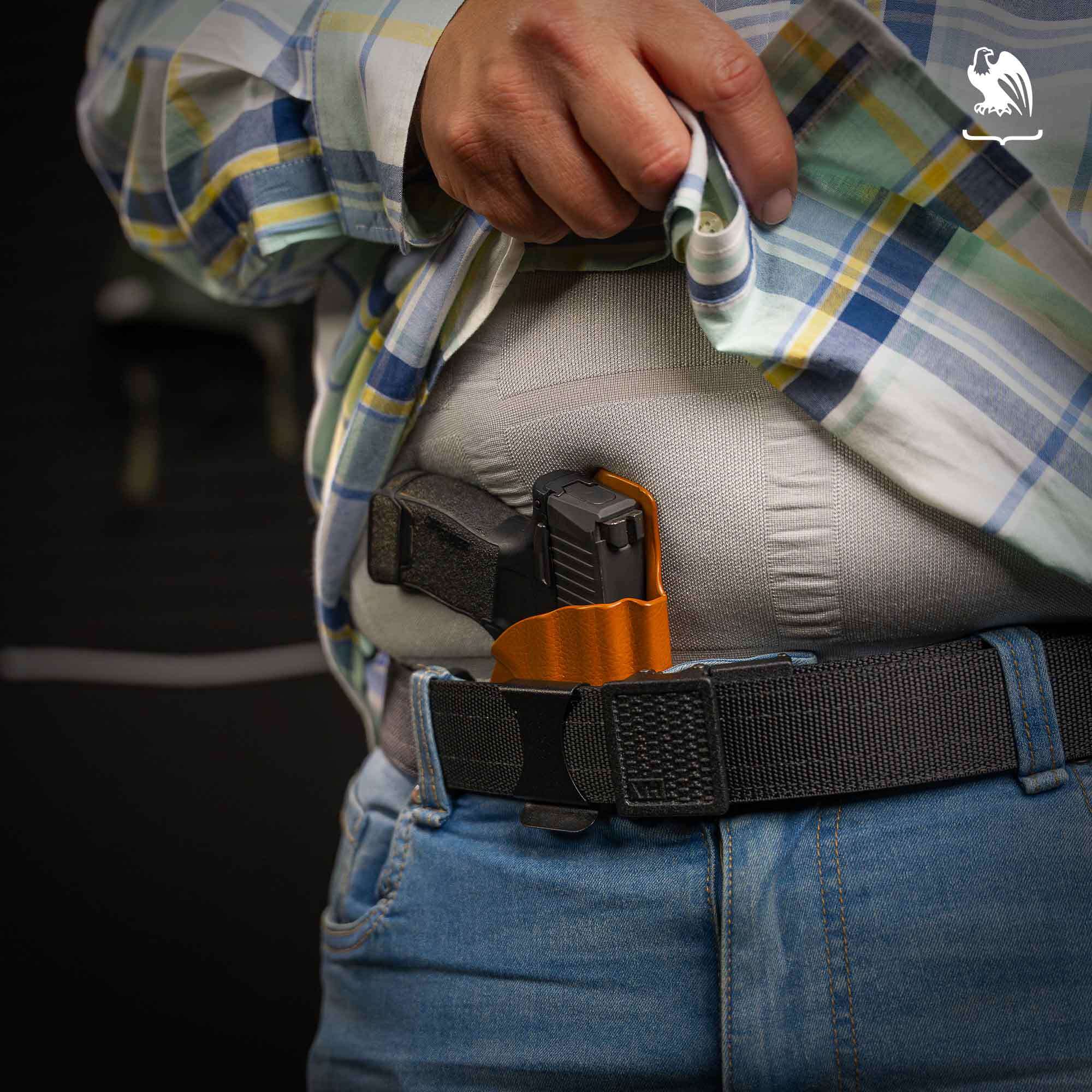 It’s pretty much impossible to figure out how to conceal carry when overweight if you’re not sure how your experience differs from your average- and slim-built counterparts in the first place.
So, why does my gun print more than a skinny guy's?
It has everything to do with waistline curvature. Unlike a slimmer person, who can wear their pistol flat against their body, when you’re sporting a belly and love handles, the barrel of your gun is pulled in by your belt, and the grip is pushed away by your muffin top.
Fortunately, this is a fairly simple problem to fix. But you can’t expect to use the same techniques and gear as someone with a slim build. A larger frame requires a larger holster that offers even weight distribution, as well as greater adjustability. The standard 15 degrees of cant adjustment that most holsters allow just isn’t going to cut it, and can actually make printing worse when you have a rounder waist. Instead, opting for a holster that allows you to angle your pistol up to 30 degrees can help you find that sweet spot of comfort and concealment, no matter how many inches around you measure.
The right position, too, can make all the difference.
Finding Your Carry Position
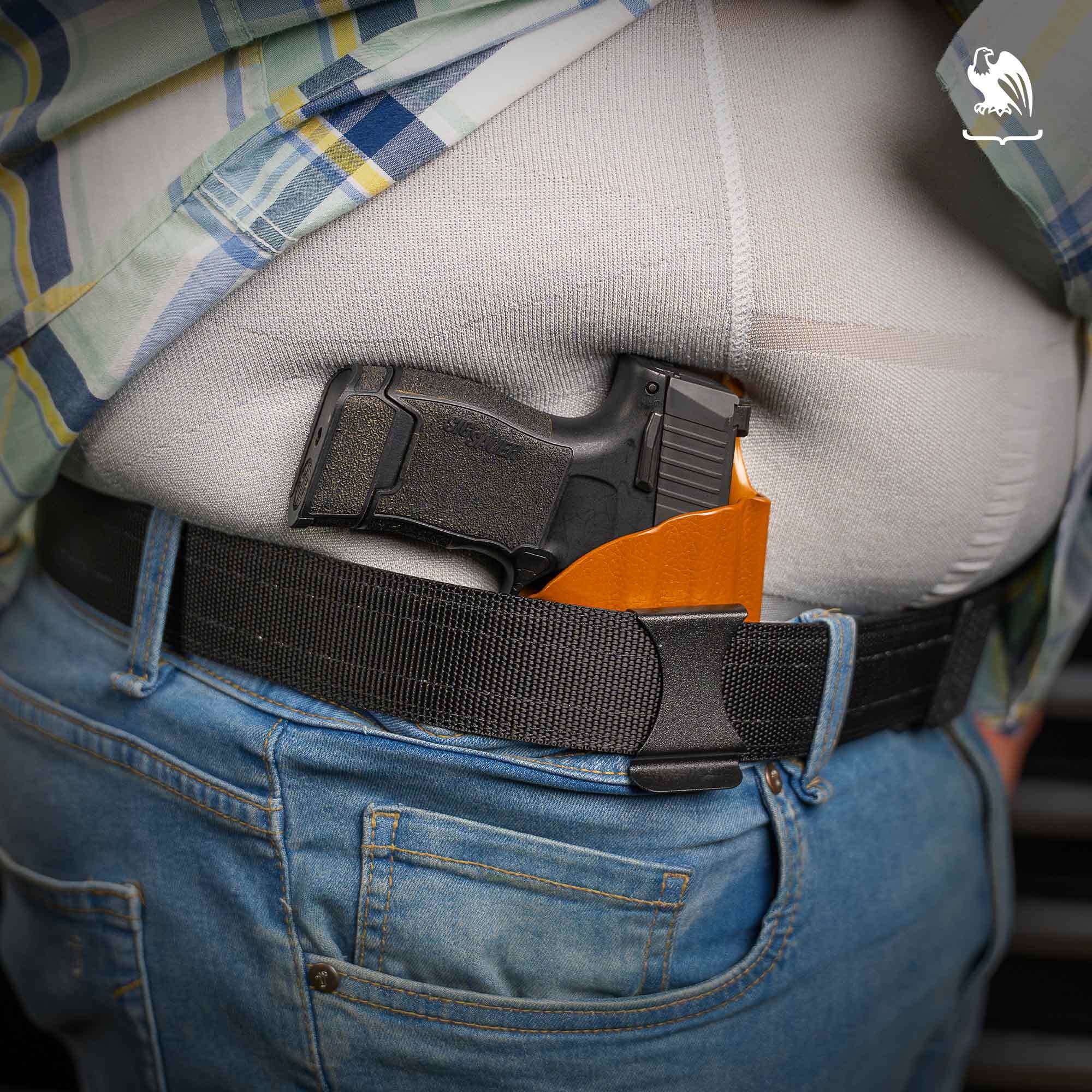
As for everyone, where you position your gun and holster along your waistline makes a huge difference when it comes to the overall comfort and concealment of your CCW. And your size certainly influences which positions work well and which just… don’t. So what’s the best carry position if you’re overweight? While everyone is different, the following carry positions tend to work best for heavy-set people, generally speaking.
3–4 O’clock
In terms of comfort, it’s hard to beat the 3–4 o’clock—or 8–9 o’clock if you’re left-handed—position. This is especially true if you’re opting for OWB carry, though it can work with IWB as well. Whether you’re sitting or standing, this position is overall just very comfortable to wear and easy to draw from, too. That being said, the downside to 3 o’clock carry is that it’s also incredibly challenging to conceal on any body type. Because of its position directly on the side of your hip, your carry pistol will stick out more than usual, and you’ll have to be more selective about the clothing you wear. But if you can make it work, more power to you, because you can’t beat it as far as comfort goes!
5 O’clock
Similar to the 2 o’clock position, 5 o’clock concealed carry (or 7 o’clock for our left-handed friends) positions your firearm right behind the love handle without entering into the danger zone that is small-of-back carry. It’s a little bit harder to reach back there, but it’s still reasonably accessible and is one of the easier positions to conceal—especially with a cover garment. The 5 o’clock position is pretty comfortable as well, though less so for those who tend to sit a lot throughout the day or suffer from a bad back.
Can You Appendix Carry With a Belly?
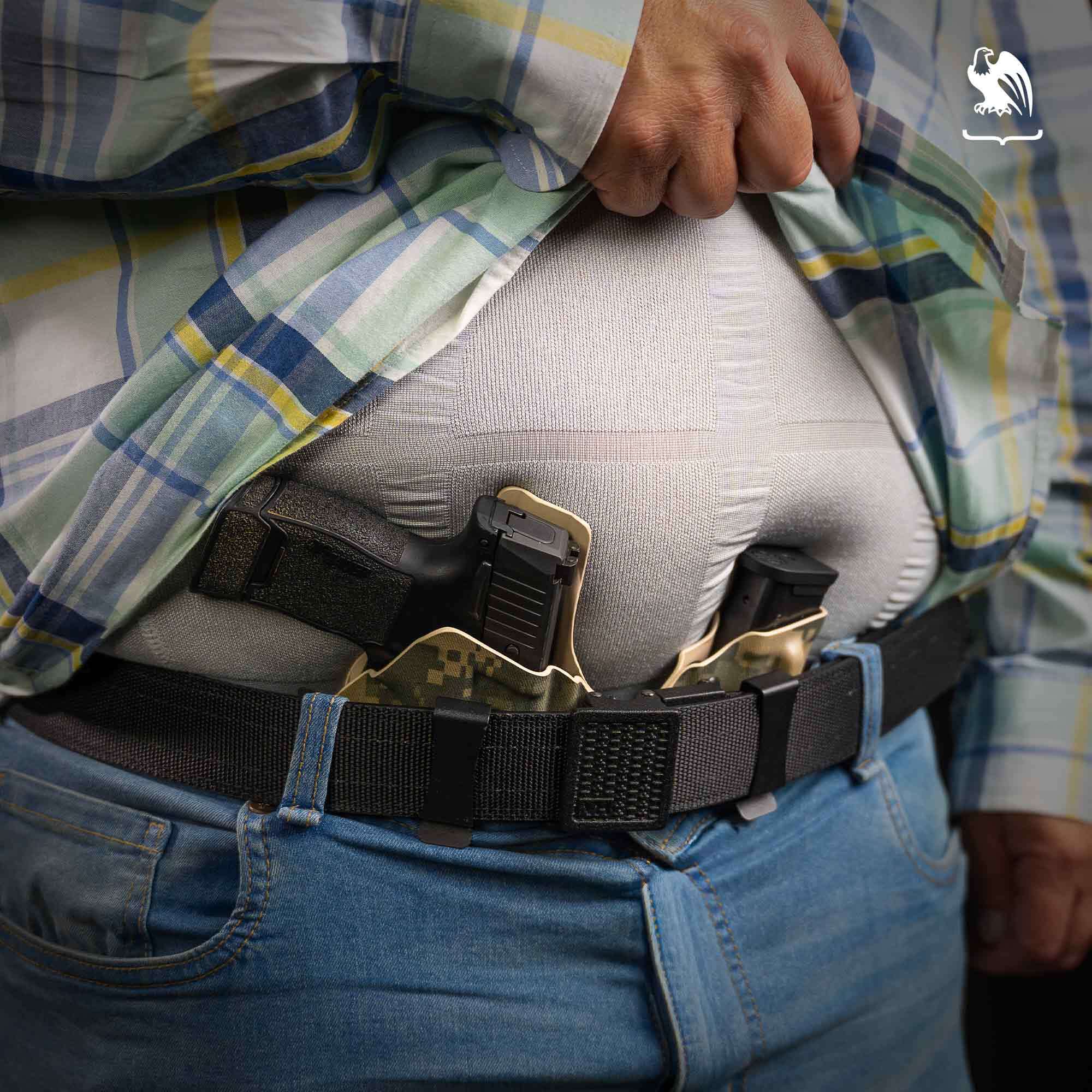
There is a common misconception in the gun world that appendix carry is reserved for skinny people. While sure, this style of carry is often easier for the smaller-framed, plenty of larger folks can and do carry appendix without any trouble — you just have to understand how to work around what’s known as “the midline dead zone,” AKA the space between your belly and lower gut pooch.
The problem with this area is that it’s exactly where your belt sits. And, in turn, where your holster will be anchored. Because there’s abdominal fat above and below this zone, you’ll want to avoid positioning your gun directly at the 12 o’clock position where your belly is at its roundest.
The solution? Work with your body instead of against it. Scootch that holster over just a bit into the one to two o’clock (or 10-11 o’clock if you’re left-handed) position. Then, be prepared to do a bit of ride-height adjustment throughout your day. When you stand, adjust your pistol over your below-the-belt pooch for deep concealment. And when you sit, lift it up to sit more against your belly. That way, you can significantly reduce the discomfort associated with the gun pressing against your body in that “in-between” space around your waistline.
Your Muffin Top Is a Physics Problem, Not a Fitness Problem
One of the most important things to understand about concealed carry for big guys is that the key to avoiding printing has more to do with pressure and positioning than anything else. Even with all the best gear, you’ll still struggle to conceal your pistol if you’re using the wrong tactics.
Your belt can be both your greatest challenge and greatest ally when it comes to concealment. In order to keep your pistol tucked close to your body, you need even belt pressure across the face of your holster. The problem is that this pressure has an equal and opposite effect on the soft tissue of your belly: you need your belt to be tight enough to hold everything in place without being so tight that the grip of your gun is pushed away from you.
For this reason, a ratcheting gun belt that allows for micro adjustments can be a game-changer for larger folks. Carrying your holster at a lower ride height can also allow you to loosen your belt without risking your pistol flopping and sliding around, thanks to the pressure of your pants keeping everything in place. Adjusting your holster’s cant is, of course, another great way to work with and around your natural curves.
It will likely take several tries before you get your holster and belt adjusted just right. The exact right spot will look different on every person’s body, so don’t give up! Wearing a shirt with thicker materials, a boxier fit, darker colors, or distracting patterns can also help your pistol disappear, as can the right size of pants.
Do I Need a Bigger Pants Size to Carry IWB?
Like it or not, pants sizing is a bigger deal when it comes to concealed carry than most people realize.
The reality is, if you plan to carry inside the waistband, you’ll need to start buying your pants a size or two larger to accommodate the size of your gun and holster. Not only will this be a lot more comfortable, but it will conceal better as well. You’ll also want to make sure that the pants you buy have sturdy belt loops that can accommodate at least a standard 1.5-inch belt.
If you don’t like the fashion choice that is baggy pants, relax. You always have the option of investing in pants specifically designed for concealed carry. Although many of them have a pretty obvious "tactical guy” look, brands like Arrowhead Tactical make clothing that’s carry-friendly without sacrificing style.
Gear That Actually Helps
When it comes to making concealed carry for big guys work, the right gear can make all the difference. Holsters, belts, accessories… the possibilities are endless. Let’s break it down.
An Adjustable Holster
When it comes to holsters, you can’t take a one-size-fits-all approach. The right holster for you will depend on your unique body, needs, and preferences. That said, the best holster for overweight men and women often has at least three adjustable features: ride height, cant, and retention.
Adjustability is critical when it comes to concealed carry, especially when we’re talking about a holster for a large waist. When you have more curves to work around, you need a holster that can be micro-adjusted until it vanishes under your T-shirt. Adjustable ride height makes it easier for you to reposition your holster higher or lower on your waistline, depending on your abdominal fat distribution. Adjustable cant allows you to tilt the grip of your gun forward or backward until you find a spot that’s comfortable, concealable, and easy to draw from. Adjustable retention is great for carriers of any size, making it easy to change how tightly the holster grips your gun, and in turn how much force it will take to draw and reholster.
The clips you choose also matter more than you think. A single-clip holster tends to be more compact and adjustable, while a dual-clip holster offers better weight distribution and stability. Hybrid holsters, which have a Kydex shell and a leather backing, do a great job of evenly distributing the weight of your holster regardless of the number of clips.
IWB Holsters
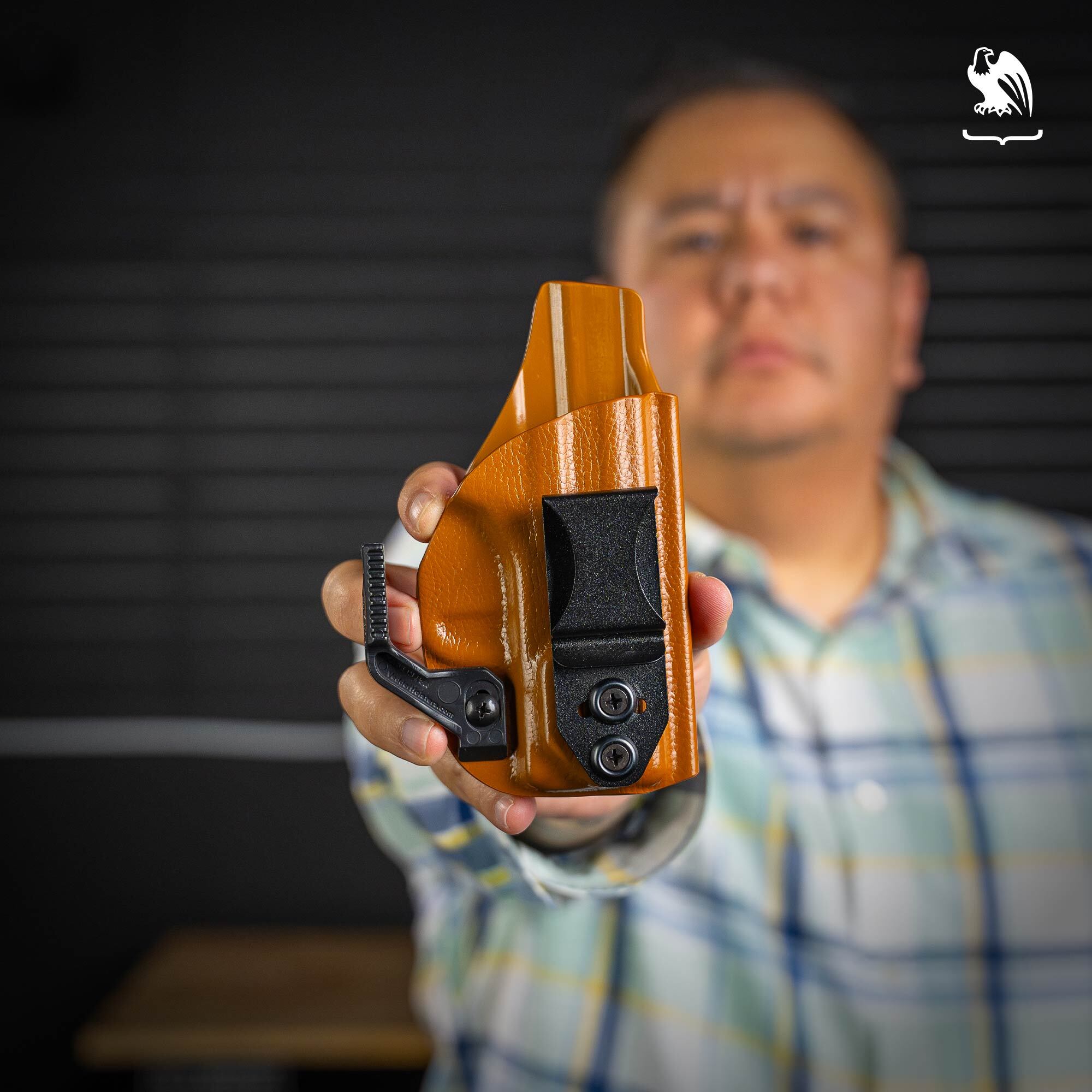
If the idea of carrying a firearm inside your pant waistband makes you sweat, you’re not alone. But don’t worry. Finding an IWB holster for big guys isn’t as hard as you think.
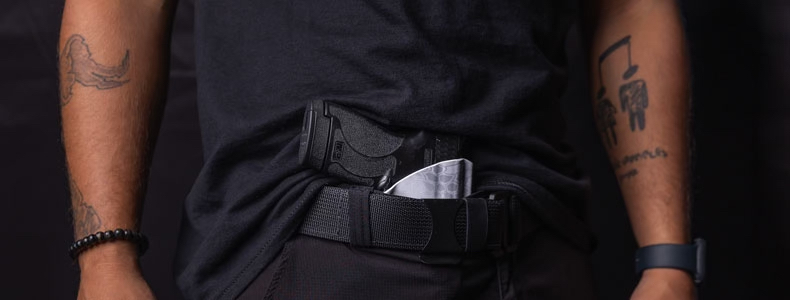
One of the most versatile CCW holsters for inside the waistband carry is the Vedder Holsters LightTuck®. This all-Kydex IWB holster is designed with adjustable retention, three levels of ride height, and 30 degrees of forward and reverse cant, making it super easy to customize to a position that feels comfortable for you. The LightTuck® is our most popular holster, and we’ve found it works for most of our customers regardless of size. You can also order it without a sweat shield, which can make it more comfortable for those with rounder midsections.
If you’re looking for maximum comfort, try a holster with two points of contact or a wide footprint to evenly distribute the weight of your gun on your waistline. Holsters with two clips like the SideTuck™ and ProTuck™ accomplish this very well, while hybrid holsters with a leather backing, like the ComfortTuck® and RapidTuck®, are even more comfy.
OWB Holsters
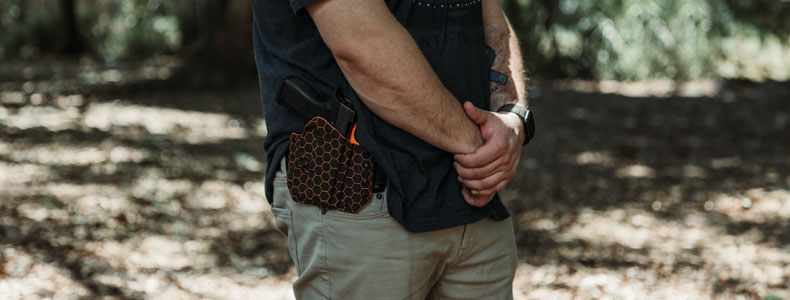
When it comes to outside the waistband carry, the Vedder Holsters Quick Draw is probably the best option going. This hybrid OWB holster features a wide leather backing with loops that comfortably secure it to your belt and a durable Kydex shell. The leather backing allows the holster to really mold to your unique body shape for maximum comfort, no matter what your size.
If adjustability and convenience are deal breakers for you, the ProDraw® paddle holster is a fantastic choice. This all-Kydex holster comes with a paddle-style clip that allows you to take it off and put it on without having to remove your belt. It also has adjustable retention and cant, so you can customize it to your liking, and you have the option of ordering it without a sweat shield to prevent anything from jabbing you in the gut (nobody likes that).
Other Holster Options
If waistband carry just isn’t working for you, don’t worry. There are plenty of concealed carry options out there, some of which work better than others for big guys. Although it’s hard to beat IWB in terms of concealment, many larger folks find that a bellyband or shoulder holster works well for them.
Off-body carry is always an option, though it’s not necessarily recommended thanks to some serious safety concerns. If you’re really struggling to make waistband carry work for you, pocket carry might be a better alternative. Holsters specifically designed for pocket carry, like the Vedder Holsters Pocket Locker®, can offer you the security and comfort you need when carrying in your pant or coat pocket.
Holster Accessories
Sometimes a holster alone just isn’t cutting it. If you’ve tried different setups and are still struggling with printing, it may be time to try using a holster accessory designed for this very situation.
A holster wedge is one of the best options if you’re noticing the grip of your gun sticking out away from your body. A holster wedge is designed to adhere to the back of your holster and draw the top of your gun closer to your body. Because it’s adjustable, it can be used to help conceal either a grip or bulky slide, and adds a bit of comfort as well. Plenty of big guys utilize a holster wedge to keep their rig closer to their body, and many find it especially helpful when carrying AIWB.
Holster claws can also aid in concealment, but are more targeted in their approach. They work by pressing against the back side of your belt to bring the grip of your gun toward your body. They can be used in conjunction with a wedge for maximum concealment.
A Concealed Carry Belt
Your belt is the foundation of your carry system. And, unfortunately, all too many people overlook this crucial element, wearing a standard belt and wondering why their pistol is sagging and shifting around their waist all day.
A belt specifically designed to support your gun and holster makes a bigger difference than you’d expect, especially for heavy-set people. Most big guys struggle to keep a regular belt from sagging without the weight of their gun pulling it down. Designed to be stiffer and more durable than most, a gun belt’s rigidity helps keep everything in place, which in turn keeps it concealed.
The exact belt you choose comes down to personal preference, but make sure it’s a sturdy gun belt designed for everyday carry. A ratcheting gun belt is an especially good choice, as it allows you to make micro-adjustments for a perfect fit on your body.
The Power of the Cover Garment
At the end of the day, even the smallest pistol will print if you don’t choose clothing that’s concealed carry-friendly. It’s amazing what the right shirt can do to make a pistol virtually disappear.
While you can easily find roomy shirts specifically designed for concealed carry, you’ll likely find there are plenty of usable shirts already in your closet. The main thing to keep in mind is that a concealed carry shirt should be loose-fitting, thick, and ideally in a dark color or pattern. You can also utilize pieces like vests, jackets and flannels to really keep things under wraps, especially if you’re carrying OWB. It all depends on your personal style.
Because bulky clothes help hide bulky guns, dressing for concealed carry in the winter tends to be easier than in the summer. Summer concealed carry is all about light and loose and is a great time to sport some bold colors and patterns. Hello Hawaiian shirts!
FAQ
Why does my gun print more than a skinny guy's?
Those with larger midsections tend to experience more printing than their slimmer counterparts because they have more curves to work around. Concealed carriers with a thin build are able to carry their gun flat against their body, while heavy-set people often notice their belt pulls the barrel toward their body while their muffin top simultaneously presses the grip outward.
What's the best carry position if you're overweight?
Most people find that anywhere within the 2-4 o’clock region works best for concealed carry on a larger frame. These positions avoid the roundest part of the belly, making a pistol easier to conceal without being difficult to draw from.
Can you appendix carry with a belly?
With the right strategy, you can absolutely carry in the appendix position with a belly. It’s all about working around the “midline dead zone,” or the space between your upper belly and lower pooch where your belt sits. Shifting your gun to the 1-2 o’clock range instead of dead 12 o’clock helps dramatically, as does adjusting the ride height lower while standing and higher while sitting.
Do I need a bigger pants size to carry IWB?
Yes. Most people find they need to wear pants one to two sizes larger than usual to accommodate their gun and holster. Alternatively, pants specifically designed for concealed carry can be a great option if you don’t like the baggy pants look.
Summary
EDC is different for everyone, and concealed carry for big guys can be especially tricky. Fortunately, with the setup, it’s actually pretty simple. Even appendix carry is doable!
Investing in gear that actually accommodates a belly, like a quality gun belt, effective cover garments, and a holster with even weight distribution and adjustability, can help. But understanding the physics of concealed carrying with a belly is even more important. Finding the right carry position is a game changer, as is learning how to shift your CCW around your waistline curve when you transition from sitting to standing. It may take some trial and error, but finding a system that works with your body rather than against it is well worth the effort.
Choosing a quality, comfortable holster can make a huge difference when it comes to concealed carry on any body type. If you’re looking for a new IWB, OWB, or pocket carry holster for your pistol, visit our Holsters by Gun Model page to find Kydex holsters tailored to your firearm. Not sure which holster is right for you? Take a look at our interactive comparison tool to view holsters side-by-side and filter by feature. Plus, explore our Resources Page for gear recommendations, concealed carry guides, and exclusive content to elevate your carry system.